A tummy tuck (abdominoplasty) flattens the abdomen by removing excess skin and fat and tightening abdominal muscles that have stretched apart. Muscle separation (diastasis recti) is common after pregnancy, especially after several pregnancies, and can make the lower belly bulge forward even when you’re at a healthy weight. Loose skin after major weight loss is another common reason for surgery.
Tummy tuck or liposuction? Liposuction removes fat through small incisions, but it can’t remove loose skin or repair stretched muscles. If diet and exercise haven’t helped because the problem is loose skin or separated muscles, a tummy tuck is usually the more effective option. The two are often combined.
We offer 2 types of Abdominoplasty / Tummy Tuck
1. Full Tummy Tuck (with Belly Button Repositioning and Muscle Repair)
Suitable for people with a lot of loose skin and fat, separated abdominal muscles, or stretch marks after pregnancy. The muscles are repaired from below the breasts to the pubic area, excess skin from above the belly button to the pubic area is removed, and a new belly button opening is created. This is performed under general anesthesia.

1. The surgeon will examine the muscles’ sagging for surgical planning, as shown in Figure 1.
2. The surgeon marks the incision on the bikini line and then opens the wound through the layer of the skin to the muscle, as shown in Figure 2.
3. Fibrosis between the layer of the skin and the muscle is released from the pubic to the sub-mammary area. The surgeon will then see the sagging muscles.
4. The surgeon then repairs the sagging abdominal muscles from the sub-mammary to the pubic, tightening the abdominal muscles, as shown in Figure 4.
5. The skin and fat layer is pulled down, with the excess from the former umbilical to the pubic removed. The surgeon then sutures the fat layer with the dissolvable stitches and carefully creates and retouches the new umbilical to prevent the scar, as shown in Figure 5.
6. The surgeon cuts and sutures the excess skin on the pubic area.
Operation time: around 3–4 hours. Three nights in hospital.
2. Mini Tummy Tuck (Mini Abdominal Lipectomy)
A mini tummy tuck is a less extensive procedure that focuses on the lower abdomen below the navel. This option may be appropriate for patients with mild to moderate skin laxity and excess tissue confined to the lower abdominal area. The procedure generally involves a smaller incision and a shorter recovery period compared with a full tummy tuck.

1. The surgeon will check the sagging of the muscles for surgical planning, as shown in Figure 1.
2. The surgeon opens the wound on the pubic and releases the fibrosis between the skin layer and the muscle from the pubic to the below umbilical area.
3. The layer of the skin and fat is then pulled down. The surgeon then cuts and sutures the excess
skin on the pubic area.
Operation time: around 1–2 hours.
If you have significant laxity above the navel or noticeable muscle separation, a mini tuck won’t achieve the result you’re after — your surgeon will be straightforward with you about which is appropriate.
Who Is a Good Candidate?
- You have loose, sagging skin or excess fat on the abdomen that doesn’t respond to diet and exercise
- Your abdominal muscles have separated after pregnancy
- You have stretch marks on the lower abdomen
- You’re at or near a stable weight
- You’ve finished having children, or are planning not to have more
- You’re in good general health and don’t smoke, or are willing to stop
- You have realistic expectations about the result
Preparation
- Consult your surgeon about your goals and realistic outcomes. Your surgeon will explain the procedure, incision position, and the expected shape.
- Have a health check, including a physical examination, chest X-ray and blood test. If you’re over 40, an EKG and cardiac stress test are needed before general anesthesia.
- You can continue taking your regular medication unless your doctor advises otherwise.
- Stop smoking for 2 weeks before and after surgery.
- Stop aspirin, anti-inflammatory drugs, certain vitamins and herbal supplements that affect blood clotting 2 weeks before surgery.
The Procedure
Full Tummy Tuck
- The surgeon assesses how much the abdominal muscles have separated, to plan the surgery.
- An incision is marked along the bikini line, just above the pubic area, and opened through the skin and fat to the muscle layer.
- The skin and fat are separated from the muscle up to below the breasts, revealing the separated muscles.
- The muscles are stitched together from below the breasts to the pubic area, tightening the abdominal wall.
- The skin and fat are pulled down, and the excess from above the original belly button to the pubic area is removed. The fat layer is closed with dissolvable stitches. A new belly button opening is created and carefully stitched to minimize scarring.
- The excess skin is trimmed and the incision along the pubic area is closed.
Mini Tummy Tuck
- The surgeon assesses the abdominal muscles to plan the surgery.
- An incision is made above the pubic area, and the skin and fat are separated from the muscle up to just below the belly button.
- The skin and fat are pulled down, the excess is removed, and the incision is closed.
Post-operative Care
- Small drains are placed to remove blood and fluid, and are usually removed after 2–3 days. While the drains are in, you’ll take antibiotics and blood-thinning medication to help prevent blood clots.
- From 2–3 days after surgery, wear a full-length compression garment at all times for at least 1 month to reduce swelling and support the repaired muscles. After that, wear it at night.
- Keep the incision dry for 2–3 days after surgery, then clean it as your doctor advises.
- Stitches are removed and the wound is checked 6 days after surgery.
- Walk gently from the first days to support circulation.
- Bruising is common and fades in 2–3 weeks. If pain, swelling or redness increases, see your doctor right away.
Recovery
- About 3 nights: hospital stay after a full tummy tuck.
- 2–6 weeks: most patients return to work, depending on the technique and their job.
- At least 6 weeks: avoid strenuous activity and heavy lifting to protect the repaired muscles.
- About 2 months: return to full exercise, including core training.
- 3–4 months: swelling settles and the result becomes clear.
Risks and Complications
- Bleeding
- Infection
- Fluid accumulation (seroma)
- Poor wound healing
- Skin loss
- Numbness
- Skin discoloration and prolonged swelling
- Scarring
- Anesthesia risks
- Recurrent looseness of skin
- Fat necrosis
- Deep vein thrombosis, cardiac and pulmonary complications
- Asymmetry
- Persistent pain
Tummy Tuck Scars
How long do scars take to fade?
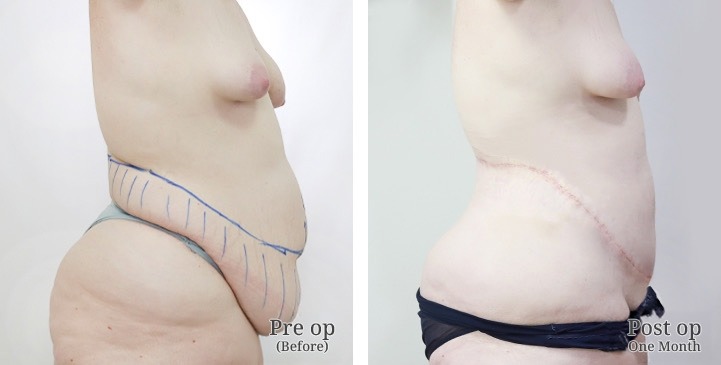
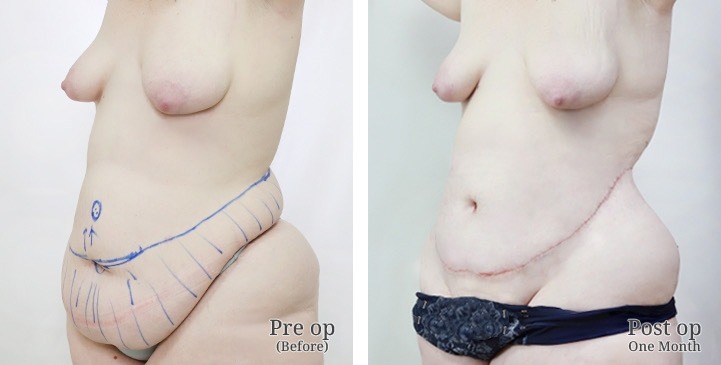
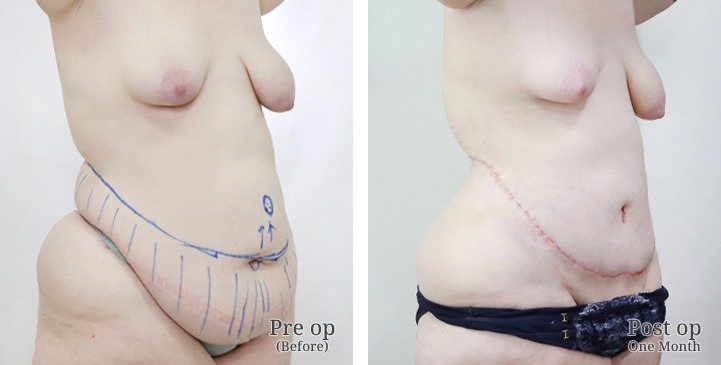
The incision usually heals in 2–3 weeks, but the scar takes several months to mature and may remain visible for a year or more. The scar sits low along the bikini line, so it’s usually hidden by underwear or swimwear. If you’ve had a cesarean section, the incision can often be placed along the existing scar.
How to care for your scar:
- Keep it clean and dry: follow your surgeon’s instructions for cleaning and dressing the wound.
- Avoid strain: avoid heavy lifting and intense exercise for several weeks so the scar isn’t stretched.
- Wear your compression garment: it supports the abdomen and reduces swelling.
- Massage the scar: once healed, gentle massage can help soften and flatten it.
- Protect it from the sun: sun exposure can darken scars.
- Use scar treatments: your surgeon may recommend silicone gel or scar cream.
Scarring is a natural part of healing and can’t be completely prevented. Choosing an experienced plastic surgeon and following aftercare instructions carefully help keep it as discreet as possible.
Before & After for Tummy Tuck
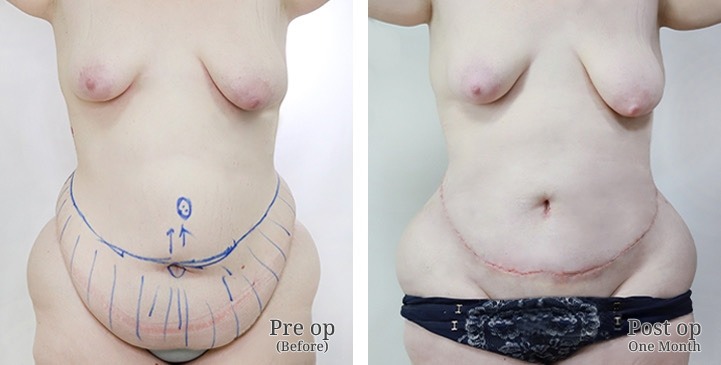
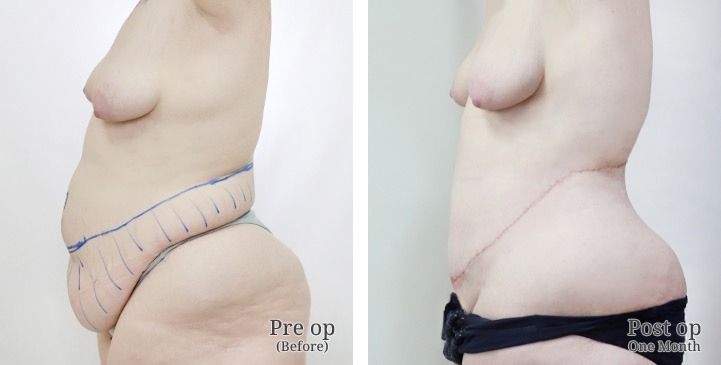
Reviews for Tummy Tuck


Why Choose Kamol Hospital in Bangkok for a Tummy Tuck
- The right technique for your abdomen: Your surgeon assesses skin laxity and muscle separation before recommending a full or mini tummy tuck.
- Muscle repair, not just skin removal: A full tummy tuck repairs separated muscles from below the breasts to the pubic area, for a flatter abdomen that skin removal alone can’t achieve.
- Attention to detail: The scar is placed low along the bikini line, and the new belly button is carefully shaped to look natural.
- Combined body planning: A tummy tuck can be combined with liposuction, a breast lift in a Mommy Makeover, or extended into a body lift.
- Hospital-level safety: Surgery under general anesthesia with a dedicated anesthesia team, an inpatient stay with drains and blood-clot prevention, in a JCI-accredited hospital.
- Support for international patients: Multilingual coordinators and Kamol Trip help you plan your stay and recovery in Bangkok.
Frequently Asked Questions (FAQs)
What is a tummy tuck?
A tummy tuck, also commonly referred to as abdominoplasty, is a cosmetic surgical procedure designed to flatten the abdomen and create a smoother, firmer contour. It achieves this by removing excess skin and fat from the abdomen and tightening the underlying abdominal muscles.
abdominoplasty is a popular option for individuals who have experienced significant weight loss, pregnancy, or aging, which can leave them with an excess of loose skin, stretch marks, and weakened abdominal muscles.
What are the benefits of a tummy tuck?
Abdominoplasty offers numerous noteworthy benefits, including:
- Flatter abdomen: Achieve a smoother, more toned abdominal profile.
- Improved body contour: Create a more proportionate and balanced figure.
- Removal of excess skin: Eliminate any loose, sagging skin that is resistant to diet and exercise.
- Tightened abdominal muscles: Strengthen weakened abdominal muscles for improved core strength and posture.
- Reduced stretch marks: Minimize the appearance of stretch marks in the lower abdomen area.
- Enhanced self-confidence: Feel more comfortable and confident in your physical appearance.
Will a tummy tuck remove my stretch marks?
If the following apply to you, then you may be a solid candidate for surgery:
- You are in relatively good overall health.
- A non-smoker.
- Currently maintaining a stable weight
- You have realistic expectations about the outcome of the procedure.
- You have significant excess skin or laxity in the abdominal area.
We would strongly advise that you schedule a consultation with a qualified plastic surgeon before making any final decisions. Our team at Kamol Cosmetic Hospital will assess your individual needs, discuss your cosmetic goals, and decide if the procedure is the safest and most appropriate option for you.
Can I get pregnant after a tummy tuck?
Yes, a tummy tuck doesn’t affect fertility. However, pregnancy stretches the skin and can separate the repaired muscles again, which may undo much of the result. That’s why it’s best to wait until you’ve finished having children. If you do become pregnant, talk to your doctor, as a revision may be needed later.
Should I have liposuction as well?
It depends on where your fat is. A tummy tuck removes skin and fat from the front of the abdomen, but fat around the waist and flanks remains. Many patients combine the two for a smoother waistline. See Body Sculpting / Liposuction for more about combining procedures.
Will my belly button look natural?
In a full tummy tuck, your belly button stays attached to the abdominal wall while the skin around it is moved. The surgeon then creates a new opening and stitches it carefully, so the scar sits inside the belly button and is hard to see. In a mini tummy tuck, the belly button isn’t moved.
How long do the results last?
The results are long-lasting as long as your weight stays stable. The removed skin and fat don’t come back, and the repaired muscles stay tight. Significant weight gain, pregnancy and natural ageing can loosen the skin again over time.
How long should I stay in Bangkok after a tummy tuck?
Plan to stay in Bangkok for about 10–14 days. This includes about 3 nights in hospital, stitch removal at 6 days, and a wound check before you fly home. Thailand is one of Asia’s leading destinations for body contouring surgery, and Kamol Trip can arrange accommodation close to the hospital. Wear your compression garment during the flight.